
The Gardnerville
Branch Jail
Our clubhouse at 1440 Courthouse Alley was built in 1910. The cells are downstairs. We meet upstairs, in the former courtroom.
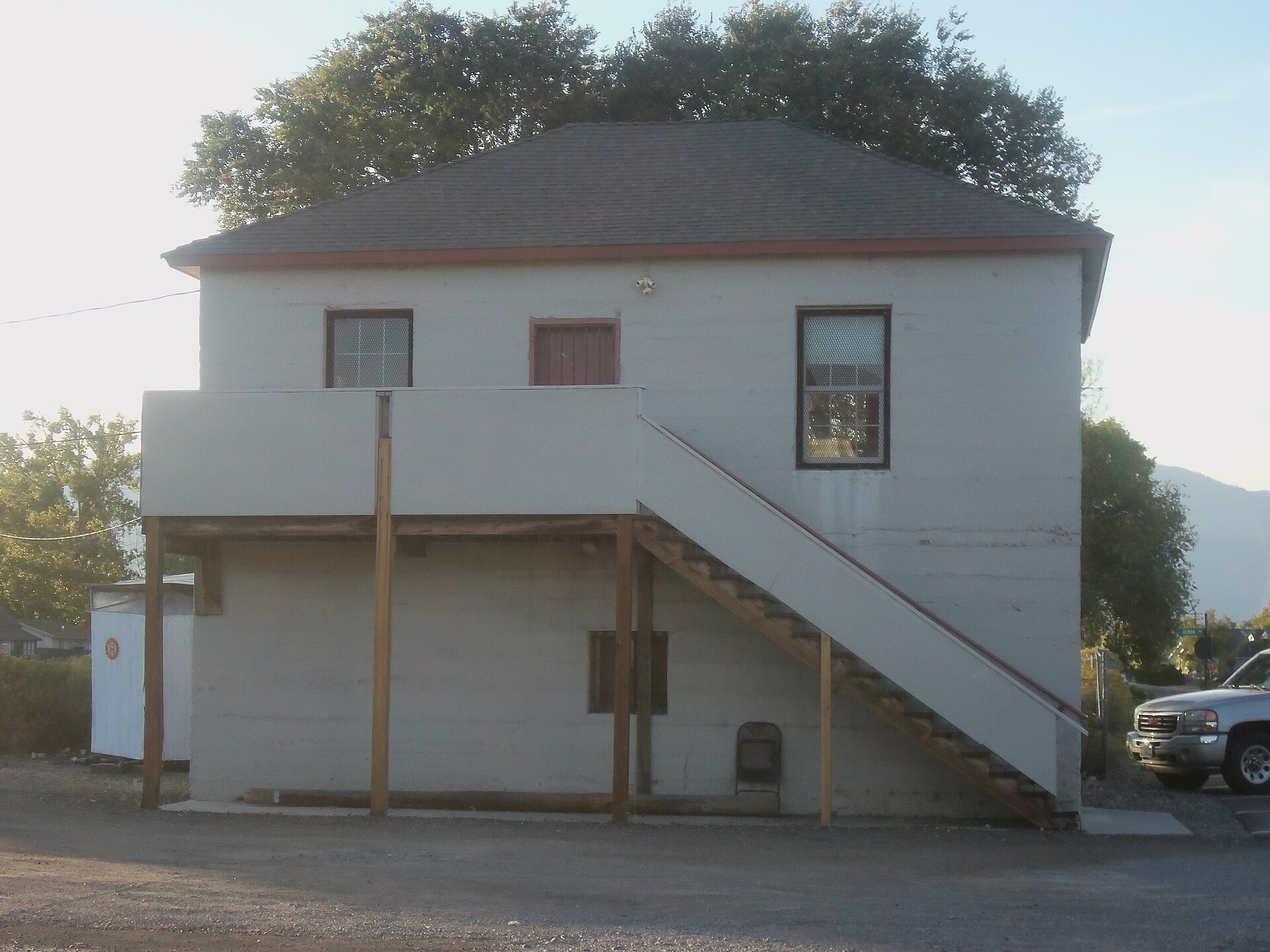
Before it was our clubhouse
Gardnerville’s first makeshift jail was a granary belonging to Justice of the Peace L. S. Ezell. He donated the property for a proper jail. The town also paid for a courtroom on the upper floor.
Louis Springmeyer prepared the plans, and Christensen & Madsen built the reinforced-concrete jail. Work was still underway when the June 28, 1910 fire destroyed Genoa’s courthouse and jail. Gardnerville’s unfinished building was pressed into service, with formal county authorization following that August.
The county transferred prisoners to the new Minden courthouse jail in 1916, but local officers continued to use the Gardnerville building for decades.
The room where we meet
The 20-30 Club’s connection to the jail goes back at least to the early 1970s. The Record-Courier has traced it to a December 6, 1973 report about members working on the lower floor.
We meet upstairs on Wednesdays. The lower floor is no longer used for storage, and the old cells are available for tours during events at Heritage Park.
It’s an unusual place to plan a festival or talk through the next club project. If you’d like to come to a meeting, visit our membership page.
What remains
The jail contains two steel cells with fold-down bed frames, barred windows, and names and dates scratched into the downstairs walls. An outside stair leads to the former courtroom.
The building was added to Nevada’s State Register in 2002 and to the National Register of Historic Places on May 16, 2003.
Gardnerville’s sundown-town history
The jail was also part of Gardnerville’s history of racial exclusion. The National Register nomination records that a fire bell beside the building signaled Native people to leave town at night. It describes the jail’s continued use for overnight detention of Native and Chinese people, as well as people accused of vagrancy.
In the wider Carson Valley, sundown restrictions excluded Native people from Gardnerville and Minden after dark. In a 1984 University of Nevada oral-history interview, Washoe elder Bernice Auchoberry recounted her father’s story of being jailed for remaining in town after curfew.
Visiting the clubhouse
The downstairs jail is available for tours during events at Heritage Park. Come see the old cells and learn about the building’s history. For questions about a particular event or tour, email the club.
Ask about a visitHistorical records
- National Register nomination: building description and history
- Gardnerville Branch Jail historical marker
- Nevada State Historic Preservation Office register list
- The Record-Courier: the club’s connection to the jail
- University of Nevada Oral History Program: Bernice Auchoberry interview (1984), pp. 7-8
- KUNR: sundown-town history and Washoe tribal members (2021)
Records checked October 7, 2026. Sources differ on the final year the jail held prisoners, so no exact closing date is given here. Sundown-history sources checked October 31, 2026.